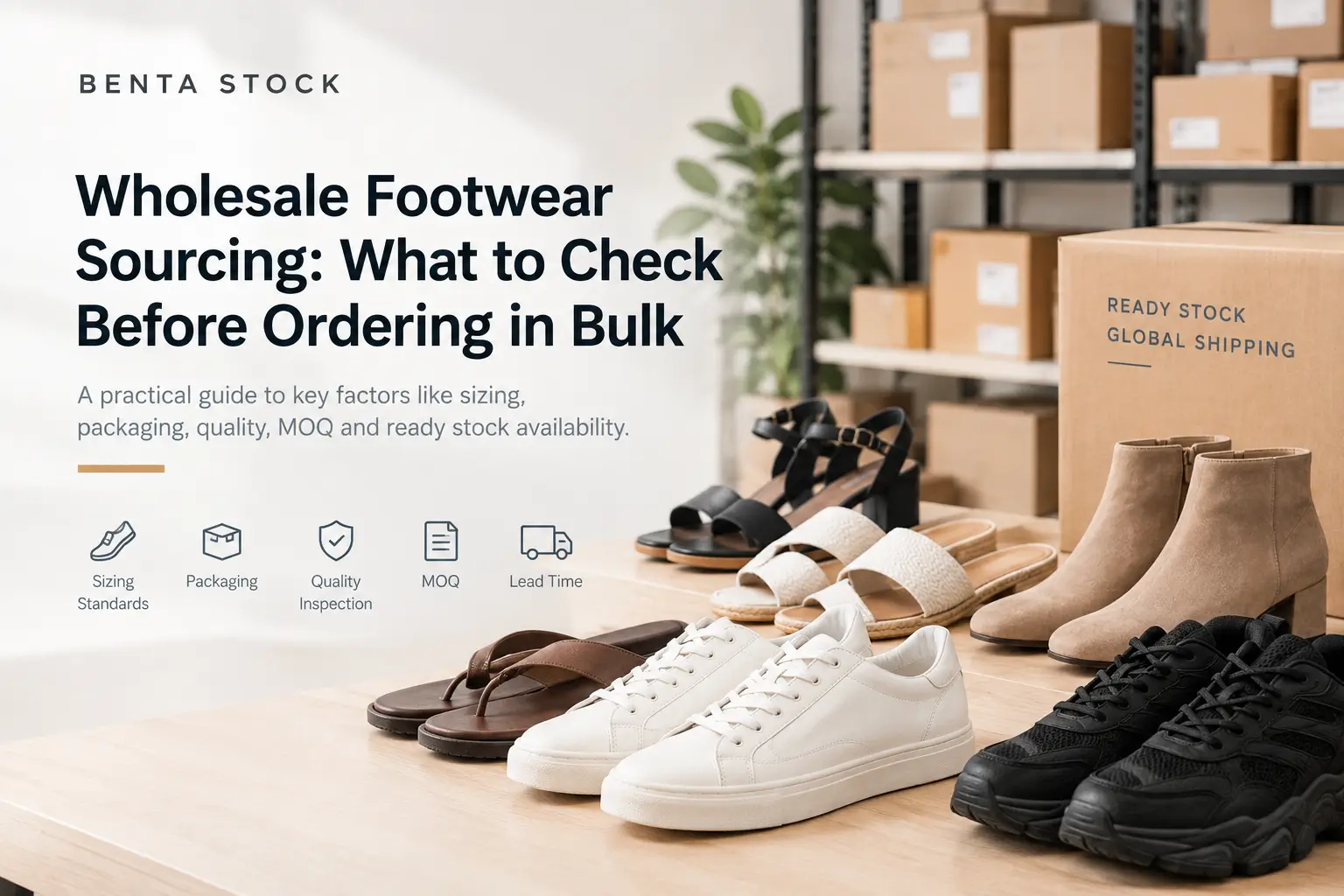
Wholesale Footwear Sourcing: What to Check Before Ordering in Bulk
Sourcing wholesale footwear requires buyers to look beyond style and price. Sizing standards can vary between markets, packaging can affect shipping requirements, and quality problems may not always be obvious from product photos.
For retailers, wholesalers, online sellers, and other buyers purchasing footwear in bulk, checking these details before placing an order can help avoid unnecessary problems later.
This guide explains the key points to review when sourcing wholesale footwear, particularly when buying from ready stock.
Why Footwear Sourcing Is Different from Apparel
Footwear has several characteristics that make bulk sourcing different from buying apparel.
Unlike garments, shoes contain structured components such as soles, heels, insoles, hardware, and other materials. These components can affect durability, fit, packaging, and shipping.
Buyers should pay particular attention to:
- Size standards and conversions
- Size availability
- Materials and construction
- Packaging
- Product inspection
- MOQ and size-run requirements
- Current stock availability
These details become especially important when purchasing products for resale.
What to Check Before Ordering Wholesale Footwear in Bulk
1. Confirm the Size Standard
Footwear sizing can vary between US, EU, UK, and other regional systems.
Before confirming an order, ask the supplier which sizing standard is being used and request a size chart for the specific product.
Do not rely only on the size printed on the shoe or product listing. A clear size conversion and measurement reference can help reduce sizing problems when selling into a specific market.
2. Check Available Sizes and Size Runs
Ready stock is limited to the inventory currently available.
A supplier may have a style available but not every size or a complete size run. Buyers should therefore confirm the actual size assortment before placing a bulk order.
For retailers, this is important because an incomplete size range may affect how the product can be merchandised and sold.
3. Ask About Packaging
Footwear packaging can affect both product protection and shipping volume.
Depending on the product and supplier, footwear may be packaged individually or in bulk. Buyers should confirm the standard packaging before ordering and determine whether it is suitable for their shipping method and sales channel.
If individual boxes are required, it is also worth considering how packaging volume may affect transportation costs.
4. Review Quality Inspection
Footwear quality issues may involve areas such as:
- Sole attachment
- Stitching
- Adhesive or bonding
- Hardware
- Surface finishing
- Size consistency
- Overall appearance
Rather than assuming that every product has been inspected to the same standard, ask the supplier what quality checks are performed before shipment.
If necessary, buyers can also request product photos, samples, inspection information, or other supporting details before confirming a bulk order.
5. Confirm MOQ Requirements
MOQ structures can vary between footwear suppliers and products.
Some suppliers may set requirements by style, while others may have requirements related to sizes or size runs.
Before placing an order, confirm exactly how the MOQ is calculated and whether different available styles can be combined.
Footwear Categories Commonly Available as Ready Stock
Ready stock footwear can cover a wide range of products depending on the supplier's current inventory.
Common categories may include:
CategoryPotential Wholesale BuyersCasual SneakersGeneral retailers and online sellersSandalsSeasonal retailers and resellersBootsCold-weather retailers and distributorsSlippers & Indoor FootwearValue retailers and lifestyle sellers
The actual availability of each category depends on current stock.
For buyers who need to fill a product gap or test a footwear category without waiting for a new production cycle, ready stock can be an option worth considering.
Ready Stock Footwear vs. New Production
The choice between ready stock and new production depends on the buyer's purchasing goals.
FactorReady Stock FootwearNew ProductionProduct AvailabilityExisting inventoryProduced after orderLead TimeNo new production cycle for available stockProduction time requiredStyle SelectionBased on available inventoryGreater development flexibilityCustomizationUsually limitedMore customization possibleBest Suited ForReplenishment, testing, and faster sourcingCustom collections and planned product development
Ready stock can be particularly useful when speed and existing product availability are more important than developing a completely new style.
Questions to Ask a Wholesale Footwear Supplier
Before placing a bulk order, buyers should confirm:
- What sizing standard is used?
- Is a size chart available?
- Which sizes are currently in stock?
- Is a full size run available?
- What is the MOQ?
- Is the MOQ based on style, size, or another unit?
- What materials are used?
- What packaging is included?
- What quality checks are performed?
- What is the current lead time?
- What shipping options are available?
Having these answers in advance makes it easier to compare suppliers and determine whether a particular ready stock product fits your market.
Sourcing Standards and Compliance
Footwear buyers may also need to consider product safety, labeling, and other requirements depending on the destination market and product type.
Industry organizations such as the American Apparel & Footwear Association provide resources covering issues relevant to apparel and footwear businesses.
However, specific compliance requirements can vary depending on the product, materials, destination country, and intended use. Buyers should verify the requirements applicable to their own market before importing or selling footwear.
FAQ
Do I need to check sizing standards when buying wholesale footwear?
Yes. Even when selling in a single market, the supplier may use a different regional sizing system. Always request the supplier's size chart and confirm the applicable standard before ordering.
Is boxed packaging always better than bulk packaging?
Not necessarily. Individual boxes can provide additional protection and may be useful for certain retail channels, but they also increase shipping volume. The appropriate packaging depends on the product, sales channel, and shipping method.
Can I order only selected sizes?
This depends on the supplier's current inventory and MOQ structure. Some ready stock products may have flexible size availability, while others may be offered only in specific size assortments.
Is ready stock footwear suitable for testing a new category?
It can be. Existing inventory can allow buyers to test products without waiting for a new production cycle. However, buyers should first confirm available styles, sizes, MOQ, pricing, and current stock status.
Conclusion
Successful wholesale footwear sourcing starts with the details that are easy to overlook: sizing standards, available size runs, packaging, quality inspection, MOQ, and current availability.
For buyers looking to replenish inventory, test new styles, or source products without starting a new production cycle, ready stock footwear can be a practical sourcing option.
Browse BENTA STOCK's current Footwear collection to see available styles, or contact us to confirm current sizing, availability, and purchasing details.