How to Buy Wholesale Stock Clothing from China: A Buyer's Guide
If you're a wholesaler, importer, or retail buyer looking to source apparel efficiently, buying wholesale stock clothing from China is one of the fastest ways to get inventory moving without waiting for a long production cycle.
This guide explains what wholesale stock clothing is, what categories are commonly available, and what to check before committing to a supplier. It also covers MOQ, quality inspection, relabeling, shipping terms, and how to request an up-to-date stock list.
What Is Wholesale Stock Clothing?
Wholesale stock clothing refers to apparel that has already been produced and is held in inventory, ready to ship, rather than garments manufactured to order through a new production run.
Because the stock already exists, buyers can benefit from:
- Faster turnaround without waiting for a full production cycle
- The ability to review actual products or current product photos before ordering
- Lower minimum commitments compared with many custom manufacturing orders
- Access to multiple styles and categories within a single order
This makes stock clothing a practical option for buyers who need to restock quickly, test new categories, or fill gaps in their product range without the lead time of a full production order.
Why Buy Stock Clothing from China?
China remains a major apparel sourcing hub, which means stock suppliers can offer a broad and frequently changing range of categories, fabrics, and styles.
For international buyers, the main advantages include:
- Wide category coverage — from knitwear and dresses to activewear, footwear, bags, and accessories, often available from a single supplier
- Established logistics infrastructure — well-developed export shipping routes to markets across North America, Europe, the Middle East, Africa, and Asia
- Flexible wholesale sourcing — stock suppliers can often support smaller quantities than a new custom production order would require
- Faster shipment — because the goods have already been produced, shipment can usually begin once the order, inspection, and logistics arrangements are confirmed
For buyers working with seasonal demand or short replenishment windows, ready stock can be a useful alternative to starting a new production order.
What Types of Stock Apparel Can You Buy?
Stock apparel suppliers typically organize inventory into categories so buyers can quickly identify the products relevant to their market.
Common categories include:
Knitwear & Sweaters
Ready stock knit tops, cardigans, and sweaters across different weights, constructions, and seasonal styles. These products can be suitable for both seasonal and year-round wholesale demand.
Activewear
Leggings, sports tops, and performance-oriented apparel for buyers supplying gyms, sportswear retailers, active lifestyle stores, and athleisure-focused brands.
Dresses
A range of casual and everyday dress styles suitable for retail distributors and wholesalers looking for versatile, ready-to-ship inventory.
Tops & Shirts
Woven and jersey tops, shirts, and blouses are commonly stocked and can be useful for buyers building a broad wholesale assortment.
Pants & Bottoms
Casual and everyday bottoms that can complement tops, dresses, and other apparel categories in a wholesale order.
Outerwear & Jackets
Seasonal jackets and outerwear pieces for buyers planning around colder-weather demand or looking to add seasonal products to their assortment.
Pajamas & Loungewear
Comfort-focused apparel suitable for sleepwear, homewear, and lifestyle retail categories, with demand across a range of international markets.
Footwear
Ready stock footwear can be combined with apparel orders to help buyers build a broader product offering from one sourcing partner.
Bags & Accessories
Bags and accessories can complement apparel purchases and allow distributors to expand their assortment without sourcing every product category from a separate supplier.
.jpg)
How to Choose a Stock Clothing Supplier
Not all stock clothing suppliers operate in the same way. Before committing to an order, buyers should check several key areas.
Check Available Inventory
Ask for current product photos, stock lists, or inventory information rather than relying only on older catalog images.
Stock apparel changes frequently as products are sold and new inventory becomes available, so the information you receive should reflect what is currently available in the warehouse.
Confirm MOQ
Minimum order quantities for stock apparel are generally lower than those for new custom production orders because the goods have already been manufactured.
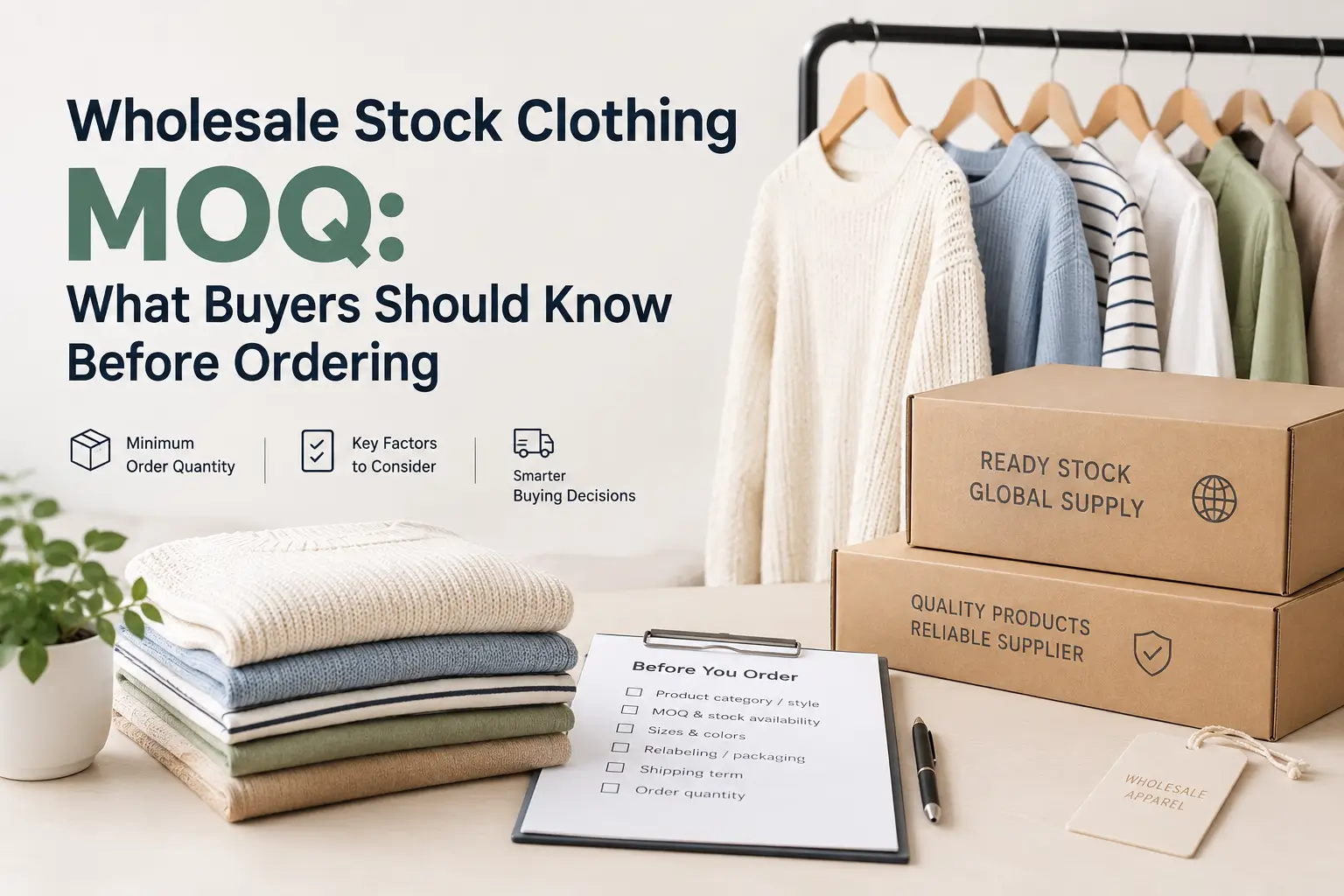
Our standard MOQ is 1,000 pieces, although the exact quantity can vary by style, category, and current stock availability. Always confirm the current MOQ for the specific products you are interested in before finalizing an order.
Ask About Quality Inspection
A reliable stock supplier should be able to explain how products are checked before shipment.
Depending on the product and buyer requirements, inspection may include:
- Visual inspection for visible defects
- Measurement and sizing checks
- Label and tag verification
- Color and appearance checks
- Packing verification
- Quantity verification
If quality inspection is important to your business, ask the supplier about its inspection process before placing the order.
Check Relabeling Options
If you plan to sell stock apparel under your own brand, confirm whether the supplier provides relabeling or private-label support.
Ask about:
- Available label and tag options
- Relabeling MOQ
- Additional costs
- Turnaround time
- Packaging requirements
Relabeling requirements may affect both cost and delivery time, so they should be confirmed before the order is finalized.
Confirm Shipping Terms
Ask which trade terms the supplier supports and make sure you understand which costs and responsibilities remain with your company.
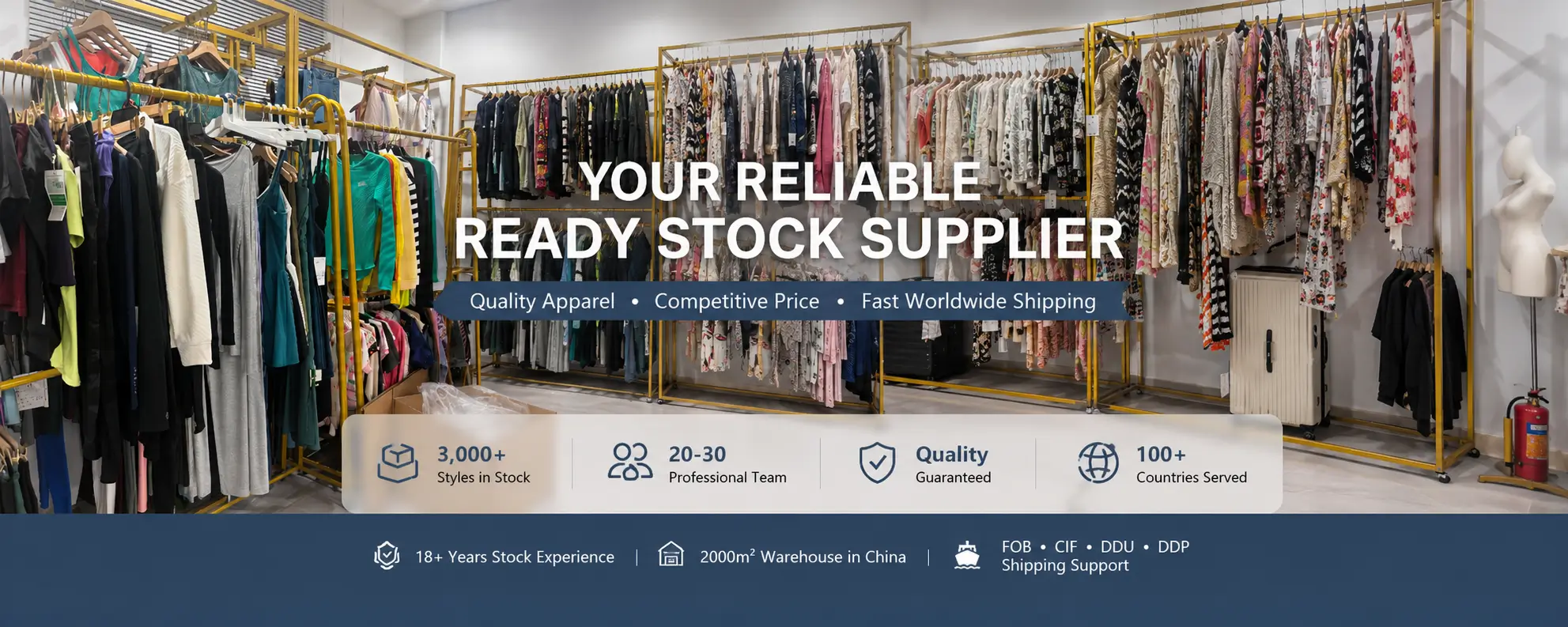
Common options include FOB, CIF, DDU, and DDP.
What MOQ Should You Expect?
MOQ for stock apparel is generally lower than what you'd see with custom-manufactured orders because the goods are already produced.
Our standard MOQ is 1,000 pieces, although the exact minimum can vary depending on the style, category, and quantity currently available.
MOQ may also depend on how you structure the order. For example, the minimum may differ when purchasing one style in bulk compared with combining multiple styles or categories in the same shipment.
For styles with limited remaining inventory, the available quantity may also determine how much you can purchase.
For this reason, it's best to request the current MOQ and available quantity for the specific products you're considering rather than relying on a general minimum.
How Stock Clothing Is Checked Before Shipment
Quality control matters for stock goods just as it does for made-to-order production.
Before shipment, reputable suppliers may inspect stock for visible defects, verify measurements and labeling, and check that packing and quantities match the buyer's requirements.
Depending on the order, buyers may want to confirm:
- Product appearance and workmanship
- Measurements and size distribution
- Color consistency
- Labels and tags
- Packaging
- Carton quantities
- Final order quantity
If your business has specific quality standards, communicate them before the order is prepared for shipment. This gives the supplier a clear reference for the inspection process.
Can You Add Your Own Brand Label?
Many stock apparel suppliers offer relabeling services, allowing buyers to replace or add labels, tags, and packaging to match their own brand.
This can be useful for wholesalers, retailers, and distributors who want to sell ready stock under their own brand rather than using a generic label.
However, relabeling is normally a separate process from simply purchasing stock. Ask the supplier about the relabeling MOQ, available options, additional costs, and turnaround time before placing the order.
For larger orders, it is also worth confirming whether packaging, hangtags, care labels, and other branding elements can be customized together.
FOB, CIF, DDU and DDP: Which Shipping Term Should You Choose?
These trade terms define different responsibilities for transportation, insurance, import clearance, duties, and delivery.
- FOB (Free on Board) — the supplier handles the goods through loading onto the vessel at the agreed port of shipment. The buyer generally arranges the main international transportation and subsequent costs.
- CIF (Cost, Insurance and Freight) — the supplier arranges and pays for freight and insurance to the named destination port. Import clearance, duties, and costs after arrival are generally the buyer's responsibility.
- DDU (Delivered Duty Unpaid) — the supplier arranges delivery to the agreed destination, while the buyer is responsible for import duties and applicable taxes or customs charges.
- DDP (Delivered Duty Paid) — the supplier arranges delivery and handles the import-related duties and taxes according to the agreed terms, providing a more comprehensive door-to-door solution.
The right option depends on your importing experience, existing freight arrangements, destination country, and how much of the logistics process you want to manage yourself.
Buyers with established freight arrangements may prefer FOB, while buyers looking for a simpler shipping process may consider CIF or DDP depending on the destination and supplier's available service.
Always confirm the exact shipping scope and included costs with the supplier before placing an order.
How to Request a Stock List
Because stock inventory changes as products are sold and new goods arrive, the most accurate way to understand current availability is to request an up-to-date stock list directly from the supplier.
When contacting a stock clothing supplier, you do not necessarily need to request the entire inventory. Providing a few basic details can help the supplier send a more relevant list.
Consider including:
- Product categories you're interested in
- Target quantity
- Destination country
- Preferred price range, if applicable
- Whether relabeling is required
- Preferred shipping terms
A clear inquiry allows the supplier to check current availability and recommend products that better match your requirements.
FAQ
Is stock clothing the same as overstock or surplus?
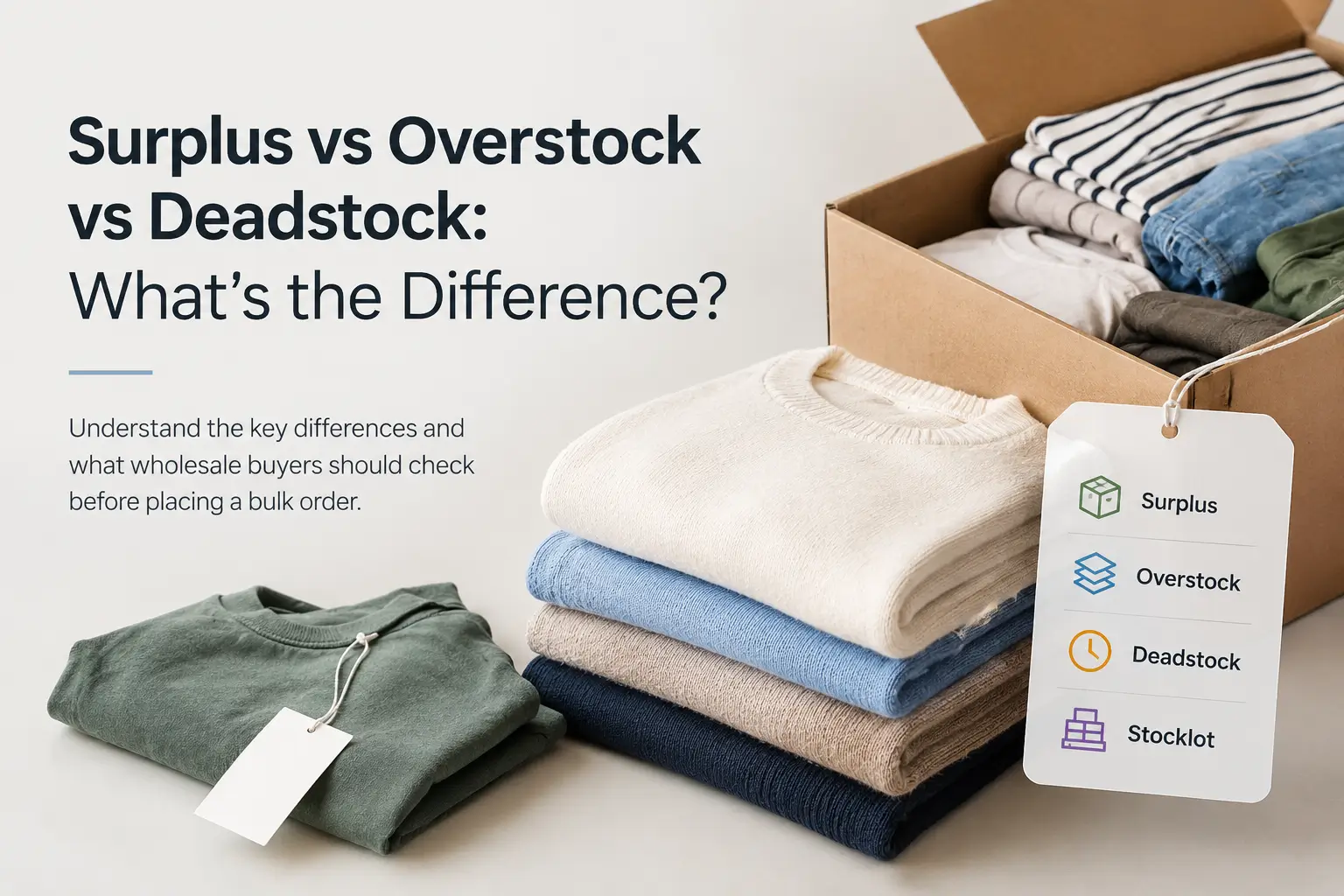
Not exactly. Stock clothing is a broader term for ready-to-ship inventory, while overstock and surplus describe specific types or origins of that inventory. The products may overlap, but the terms do not necessarily mean the same thing.
Can I mix categories in one order?
In many cases, yes. Buyers commonly combine categories such as knitwear, tops, dresses, and activewear in a single wholesale order. However, the exact conditions depend on the supplier's current inventory and MOQ requirements.
Do stock suppliers offer real-time inventory updates?
Not always. Stock changes frequently as products are sold and new goods arrive, so a website catalog should not automatically be treated as a real-time inventory system. The most reliable approach is to request current availability directly from the supplier.
Can I buy stock clothing under my own brand?
Many suppliers can provide relabeling services for ready stock apparel. Requirements vary by supplier, so confirm the relabeling MOQ, available branding options, additional costs, and turnaround time before ordering.
How quickly can stock clothing be shipped?
Ready stock can generally be prepared for shipment much faster than newly manufactured apparel, but the actual lead time depends on inventory confirmation, inspection, relabeling requirements, packing, destination, and shipping method.
Ready to See Current Stock?
If you're looking for wholesale stock clothing from China, the first step is to check what is actually available now.
Request our latest stock list to review current styles, available quantities, MOQ, relabeling options, and shipping solutions for your market.